June 5, 2026
Learn how to invest in commercial real estate: beginner guide to property types, financing, analysis & first deal strategies for 2026 wea...
If you want to invest in commercial real estate, here is what you need to know right away:
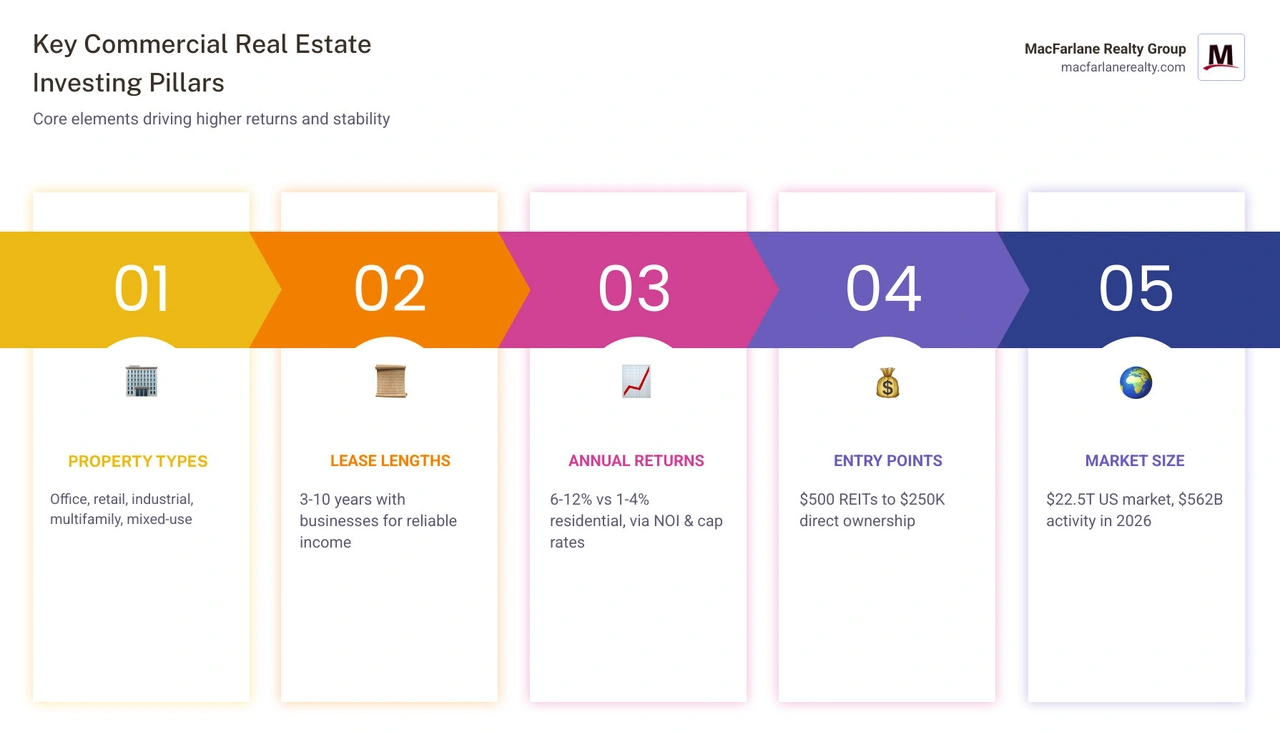
The US commercial real estate market is valued at $22.5 trillion. It has grown steadily since 2010, and investment activity is forecast to reach $562 billion in 2026 — up 16% from recent years. This is not a niche asset class anymore. It is one of the most reliable paths to building long-term wealth.
But it is also more complex than buying a rental home. Longer leases, bigger down payments, and a different valuation method mean the learning curve is real. The good news? Once you understand the fundamentals, the rules are consistent and the returns can be significant.
This guide walks you through everything — from property types and financing to due diligence, tax strategy, and building a portfolio that lasts.
I'm Michael J. MacFarlane, a real estate broker with over 30 years of experience helping Houston-area investors invest in commercial real estate with clarity and confidence. My goal in this guide is to give you the same straightforward advice I give my own clients — no fluff, no jargon, just what you need to make a smart first move.
Commercial real estate is property used to run a business or produce income. In simple terms, when we invest in commercial real estate, we buy property where rent is usually paid by businesses, operators, or multiple residents in a larger income-producing asset.
Unlike residential property, commercial value is driven mostly by income. That means investors pay close attention to net operating income, or NOI, and cap rates. It is more math-driven and less emotional. Houses sell on kitchens and curb appeal. Commercial buildings sell on income, lease terms, and risk.
Typical commercial leases also run much longer than residential leases, often 3 to 10 years. That can mean steadier income, but if a space goes vacant, the downtime can hurt more.
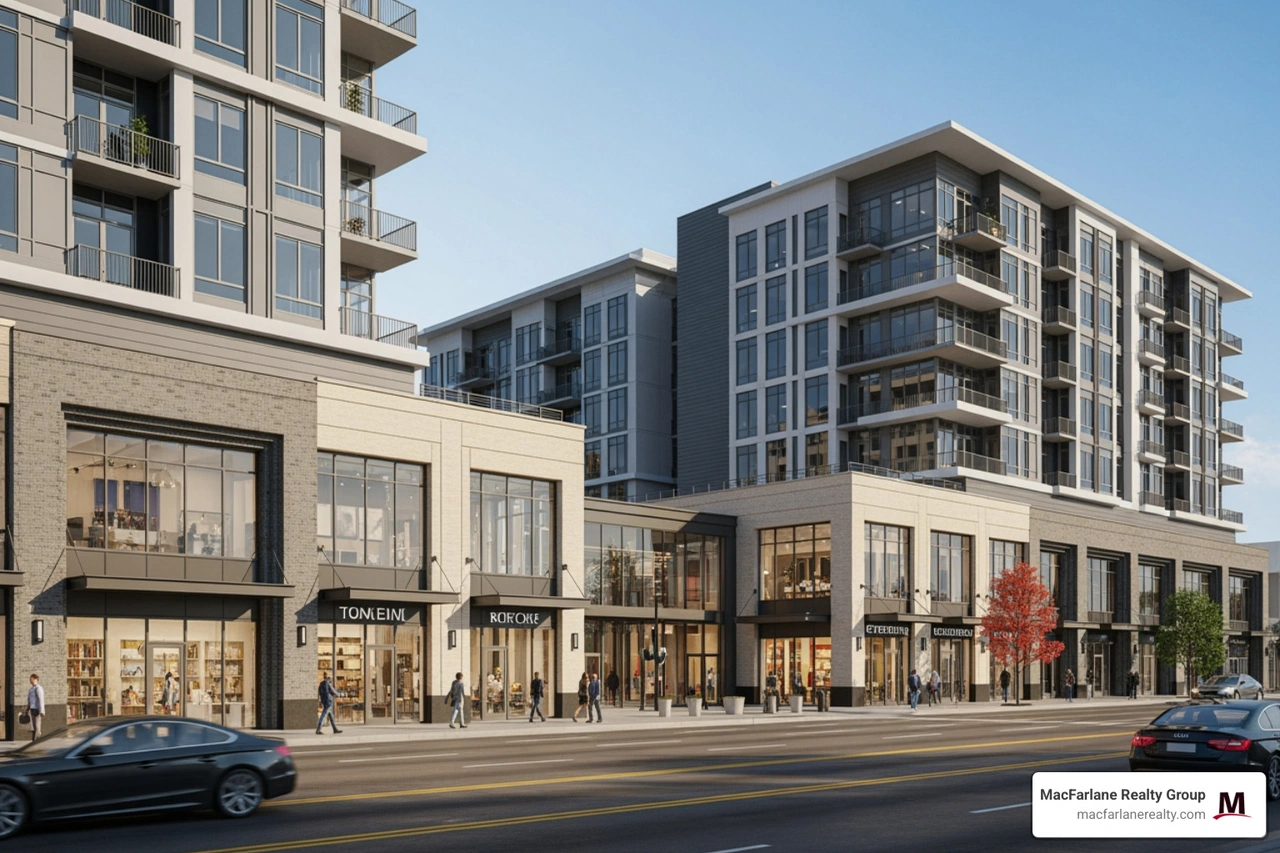
Commercial real estate includes:
For local investors, that can mean anything from a small warehouse in Katy to a neighborhood retail strip in Spring Branch, a multifamily asset in Houston, or commercial land in Houston TX.
Here is the quick side-by-side view:
| Factor | Commercial Real Estate | Residential Real Estate |
|---|---|---|
| Tenants | Businesses or multiple households | Individuals or families |
| Lease length | Usually 3 to 10 years | Usually 1 year or less |
| Valuation | Based on NOI, cap rate, and lease quality | Based mostly on comparable sales |
| Financing | Stricter underwriting, often 20% to 30% down | Easier consumer lending |
| Laws | Fewer consumer protections | More tenant protection laws |
| Vacancy impact | Can be larger and last longer | Usually easier to re-lease |
| Expenses | Can be passed to tenants in some leases | More often borne by landlord |
One more key difference: commercial tenants often care about the property's condition because customers see it. That can create better alignment between owner and tenant than in many residential rentals.
The big reasons are easy to understand:
In short, commercial real estate can be a serious wealth-building tool if you buy carefully and manage risk well.
Not all commercial properties behave the same way. A warehouse, a medical office, and a strip center may all be "commercial," but they have very different risk and management profiles.

For many beginners, these are often the most approachable:
Why these? They tend to have clearer demand, easier rent comps, and more understandable operations than large office towers or hospitality assets.
Multifamily is often a strong first step because it has broad demand and widely available financing. Small industrial can also be attractive, especially around Houston-area logistics corridors, where demand has stayed strong and industrial vacancy in many markets has remained below 4%.
A few simple examples:
Lease structure matters too. In a gross lease, the owner may pay more operating costs. In a triple net lease, tenants usually reimburse taxes, insurance, and common area maintenance. That can make income more predictable.
Watch for:
Pros:
Cons:
Commercial real estate can absolutely reward patience and discipline. It can also punish shortcuts. This is not the place for "I skimmed half a blog post and now I am a mogul."
There is no single right way to invest. The best strategy depends on your goals, timeline, and risk tolerance.
These four strategy buckets are common:
For a first-time investor, core or core-plus is usually the safest place to start. Value-add can create strong upside, but it requires more experience, more reserves, and a stronger team.
You do not have to own a building directly to get exposure to commercial real estate.
Active options:
Passive options:
REITs are one of the easiest entry points. Long-term average returns often fall in the 8% to 12% range, and you can start with far less money than direct ownership. The trade-off is less control.
If you want to stay hands-off but still learn the asset class, passive investing can be a smart first move.
Start with a plan, not a property listing.
Ask yourself:
Beginner-friendly entry paths:
Local focus matters. If you are investing in the Houston area, stay within markets you can understand and visit. That includes Houston, The Woodlands, Memorial, Katy, Spring Branch, and surrounding counties where MacFarlane Realty Group works every day.
A commercial deal lives or dies on numbers, financing, and due diligence. This is where good opportunities become good decisions.
For a useful outside overview of the process, see how to buy commercial property step by step.
Here are the core terms:
A simple example:If a property produces $100,000 in NOI and trades at an 8% cap rate, value is about $1.25 million.
Also track:
If you want help valuing an asset, read real estate investment appraisal.
Common financing choices include:
What to expect:
SBA loans can be excellent for owner-occupied properties and may allow lower down payments, sometimes around 10%. Bridge loans can help with short-term needs but cost more. CMBS can work for some larger deals, though terms can be less flexible.
Before you buy, verify everything. Then verify it again.
Your checklist should include:
Two local resources that can help:
A typical path looks like this:
Commercial deals often take 3 to 6 months from offer to closing. That is normal. It is a process, not a drive-thru.
For another overview, see understanding the commercial buying process.
Buying is only step one. Good management is what turns a property into a durable investment.
Owners are responsible for more than collecting rent. Ongoing tasks can include:
Management fees often run about 3% to 10% of gross revenue, depending on the property type and complexity. Budget for more than the mortgage. Real properties have real roofs, real parking lots, and very real air-conditioning bills in Texas.
Commercial real estate can produce strong after-tax results because of:
Cost segregation can accelerate depreciation on certain building components and improve early-year cash flow. If you own property locally, you may also want to explore a commercial property tax appeal or property tax protest commercial.
More tax-related reading:
Always work with a CPA and tax advisor before making strategy decisions.
A triple net lease, or NNN lease, means the tenant pays base rent plus their share of:
Why investors like them:
That said, NNN is not magic. If the tenant leaves, the owner still has the property. So tenant credit quality, location, and lease term still matter.
Good portfolios are diversified by more than just property count.
Consider diversifying by:
Portfolio ideas:
In our market area, diversification can also mean spreading across Houston, Katy, Spring Branch, The Woodlands, Fort Bend County, Montgomery County, Brazoria County, or Waller County rather than betting everything on one pocket.
Helpful local reading:
It can be, yes. The market is large at $22.5 trillion, long-term return potential remains attractive, and many investors value CRE as an inflation hedge and diversification tool. Industrial and well-located multifamily still look strong in many areas. Office needs more caution and more selective underwriting.
For direct ownership, many first-time investors need enough for:
That often means $50,000 to $250,000 or more, depending on deal size. If that feels steep, passive options like REITs can start around $500, while some syndications and funds require higher minimums.
The big ones are:
One 2026 issue investors should watch closely is refinancing pressure when loans mature in a higher-rate environment. A good asset with bad debt terms can still become a bad deal.
If you want to invest in commercial real estate, the smartest first step is not chasing the flashiest property. It is building a clear plan, knowing your numbers, and choosing a deal that fits your goals.
For some people, that first move is a REIT. For others, it is a small multifamily building, a warehouse in Katy, or a neighborhood retail asset in Houston. The right choice depends on your capital, risk tolerance, timeline, and local knowledge.
At MacFarlane Realty Group, we help investors move with clarity and confidence. We bring local market knowledge, concierge-level service, and practical guidance that keeps the process focused and less stressful from search to closing.
If you are ready to explore your options, start with our commercial services page. Tell us what you need. We will help you make your first commercial move the smart way.

Ask a question, request a home valuation, or get an honest read on the current market. We are here when you are ready.