March 27, 2026
Unlock cost segregation for dummies: Boost cash flow, slash taxes with bonus depreciation, and master real estate wealth strategies now!

Cost segregation for dummies is a simple way to learn about a great tax plan for people who own buildings. It is easier than you might think.
Here is the quick version:
Many building owners pay more in taxes than they should. When you buy a building, the IRS usually makes you spread your tax savings over 27.5 years for a house or 39 years for an office. That is a very slow way to get your money back.
Cost segregation changes that. It finds parts of your building that wear out faster—like carpets, lights, heaters, and parking lots. It lets you take those tax savings much sooner. Instead of a tiny bit of savings each year, you get a huge amount in the first year.
For a $1 million building, this can mean saving over $118,000 in taxes in the very first year.
I am Michael J. MacFarlane. I have been a real estate broker for over 30 years. I help people in Houston make smart choices with their property. I have seen this strategy help many regular owners save a lot of money. Let me show you how it works.
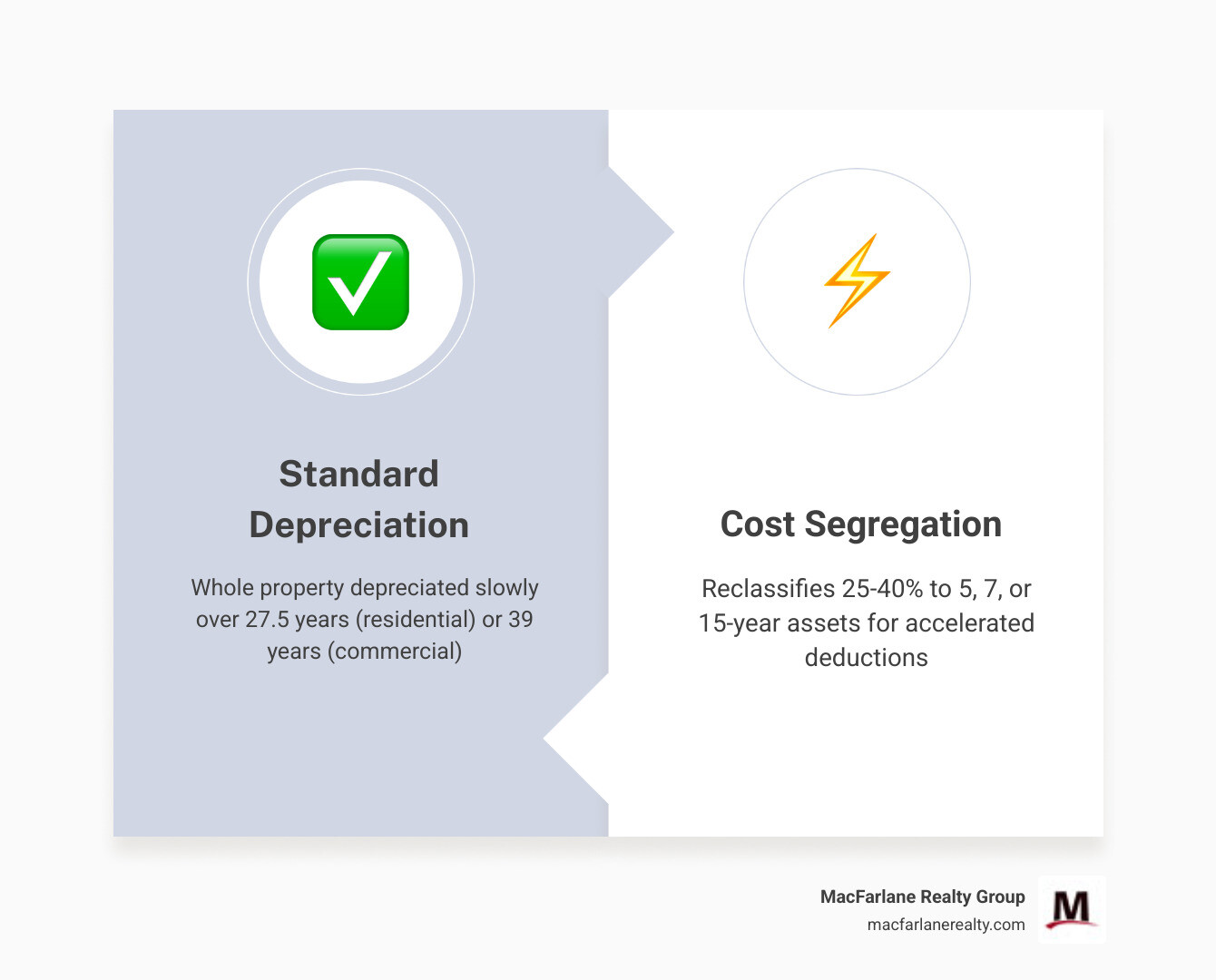

In simple terms, cost segregation is looking at a building and breaking it into pieces. Usually, the IRS sees a rental house or office as one big lump. They think a house lasts 27.5 years and an office lasts 39 years. You get a small tax break every year for "wear and tear."
But we know a carpet does not last 39 years. Neither does a dishwasher. Cost segregation for dummies shows us that we can separate these short-lived parts from the main building. This lets us put them into categories that save money faster.
The IRS has cost segregation guidelines that explain this. They use a system called MACRS. This is just a fancy way of putting things into "buckets" based on how long they last. Things like furniture go into a 5-year or 7-year bucket. Things outside, like fences or bushes, go into a 15-year bucket.
To do this right, you need experts. A team will visit your property in places like Katy or The Woodlands to look at everything.
They look for:
By finding these items, we stop treating them like a 39-year building. We start saving money on them much faster.
The main reason this works is that a dollar today is worth more than a dollar in ten years. By getting big tax breaks now, you keep more cash to buy more Texas real estate.
Most buildings can move about 25% to 40% of their value into these faster buckets. If you have a $1 million building, you might move $300,000 into the fast buckets. This can save you a lot of money. At MacFarlane Realty Group, we help owners see how this fits their plan. You can find more info about tax services on our website.
If cost segregation is the engine, bonus depreciation is the turbo boost. It lets you take a huge part of the cost for those 5, 7, and 15-year items and deduct them all at once in the first year.
The IRS explains this in their Additional first-year depreciation FAQ. This rule was made to help people invest in businesses. A new law called The One Big Beautiful Bill Act makes this 100% bonus depreciation permanent for buildings started after January 19, 2025.
Let’s look at the numbers:Imagine you buy a $1 million office building. After a study, you find $320,000 worth of items that qualify for this 100% bonus. Instead of a tiny $25,000 tax break, you get a $320,000 tax break in Year One. If you pay high taxes, that is $118,400 in real cash saved. You can use that cash to buy another property or fix up the one you have.
Almost any building that makes money can use cost segregation. We see great results with:
Whether you have a warehouse or a small shop, the plan is the same. You can learn more info about commercial services to see how we help with different types of buildings.
One secret is land value. You cannot get a tax break for land because land does not wear out. When you buy a property, you must split the price between the land and the building. We always suggest getting an expert to help decide the land's value so the IRS stays happy.
A professional study costs money, but it usually saves you much more than it costs. Prices often look like this:
The best time to do a study is the year you buy or fix up the building. But it is not too late if you have owned it for years. You can use IRS Form 3115 to get all the tax breaks you missed in the past all at once. You don't even have to change your old tax forms. This is a favorite trick for investors in Harris County.
To start, you will need:
For smaller rental houses, we offer more info about residential services to help you out.
Some people think this will make the IRS check them (an audit). But if experts do the study, it is a safe and legal move.
However, you should know about recapture. If you sell the building, the IRS might want some of that tax money back. This is why cost segregation is best if you plan to keep the building for at least a few years.
In Texas, we have a big advantage. We have no state income tax. This means you keep all of your federal tax savings without any extra state rules getting in the way.
Finally, let's talk about REPS. Usually, rental losses can only help you with rental income. But if you (or your spouse) work a lot in real estate (750 hours a year), you might qualify as a Real Estate Professional. This lets you use those big tax breaks to lower the taxes on your other jobs or business profits.
We say no. The IRS wants to see a lot of detail and expert work. If you do it yourself, the IRS might get suspicious. Hiring a pro ensures your report follows the official rules.
No. While any tax form could be checked, a professional study is a normal and legal plan. Having a detailed report from an expert is your best defense if the IRS ever asks questions.
Yes. If you plan to sell the building in less than a year, it might not help you. Also, if the building is worth less than $200,000, the study might cost more than the money you save. Lastly, if you don't owe any taxes this year, you might want to wait.
At MacFarlane Realty Group, we have spent over 25 years helping our neighbors in Houston and The Woodlands. We believe in giving great service that makes owning property easy.
Whether you are buying your first rental or managing many big buildings, we are here to help. Real estate is about more than just buildings; it is about building your future.
Ready to see how much you could save? Start your next move with MacFarlane Realty Group and let us help you keep more of your money.

Ask a question, request a home valuation, or get an honest read on the current market. We are here when you are ready.